


Normal Wear & Tear Vs. Damage In Rentals: What’s The Difference
A smooth bond refund starts with clarity. When tenants understand what they’re responsible for and what they’re not, it becomes much easier to prepare for inspections and avoid unnecessary deductions. One of the most common areas of confusion in rental properties is the difference between normal wear and tear and actual damage, which can often lead to stress during the move out process.
While everyday living naturally causes minor changes to a home, not every mark or sign of use should result in bond deductions. This article will present a difference between normal wear & tear and damage. Knowing how property managers assess wear and tear versus damage and how cleanliness plays a role in final inspections, can make a significant difference. This is especially important when planning for quality bond cleaning Port Macquarie, as a well presented property helps ensure normal ageing isn’t mistaken for tenant caused damage.
Hide
Show
- What Is Normal Wear & Tear?
- What Is Considered as Damage in Rentals?
- Understanding the Fine Line Between Wear & Tear and Damage
- How Property Managers Assess Wear & Tear vs. Damage
- The Role of Bond Cleaning in Avoiding Disputes
- How Tenants Can Protect Their Bond
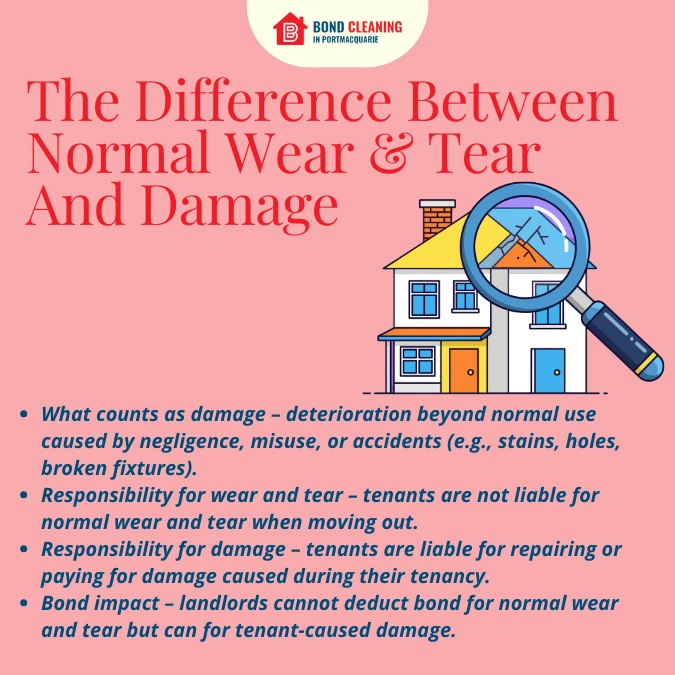
- Infographic For The difference Between Normal Wear & Tear And Damage
- Wrapping Up
1. What Is Normal Wear & Tear?
Normal wear and tear refers to the gradual deterioration of a property that occurs through everyday, reasonable use. It’s expected that a home will show some signs of ageing over time, even when tenants take good care of it. This includes things like minor scuff marks on walls, faded paint from sunlight or lightly worn carpets in high traffic areas.
Importantly, wear and tear is not something tenants are financially responsible for. Property owners and managers factor this into the cost of renting out a home. As long as the changes are minor and consistent with normal living, they generally cannot be claimed as a reason to deduct from your bond.
2. What Is Considered as Damage in Rentals?

Damage, on the other hand, occurs when something in the property is broken, stained, or altered due to negligence, misuse or accidents that go beyond normal use. Examples include large holes in walls, broken fixtures, cracked tiles or carpets ruined by pet stains or spills that were never cleaned.
Unlike wear and tear, tenants are responsible for damage. If an item can’t be reasonably restored through standard cleaning or minor maintenance, the cost of repair or replacement may be deducted from your bond. This is where disputes often arise, especially if the tenant believes the issue is simply wear and tear.
3. Understanding the Fine Line Between Wear & Tear and Damage
Some situations fall into a grey area and often lead to disagreements between tenants and property managers. For example, small nail holes from hanging pictures are usually considered wear and tear, while large, unpatched holes may be classed as damage. Similarly, lightly worn carpet fibres are normal, but deep stains or burn marks are not.
Another common example is kitchen appliances. Grease build up over time may be seen as wear and tear, but thick grime caused by lack of cleaning is considered damage. This is why professional bond cleaning Port Macquarie services are often recommended they help ensure the property is returned in a condition that meets inspection standards.
4. How Property Managers Assess Wear & Tear vs. Damage
Property managers assess the condition of a rental based on several factors, including the length of the tenancy, the age of the property and the original condition at the start of the lease. An issue that might be acceptable after a five year tenancy may not be acceptable after just six months.
Entry and exit condition reports play a crucial role here. These documents provide a direct comparison of the property’s state before and after your tenancy. Photos, notes and maintenance records all help determine whether an issue is due to fair wear and tear or tenant caused damage.
5. The Role of Bond Cleaning in Avoiding Disputes
Many bond disputes arise not from actual damage, but from poor cleanliness. Dirt, dust, mould and grease can make normal wear look like neglect. Thorough cleaning ensures that inspectors focus on the property’s condition rather than surface level issues caused by dirt.
Hiring professionals for bond cleaning Port Macquarie can significantly reduce the risk of disputes. Experienced cleaners know exactly what property managers look for during inspections, from spotless bathrooms to grease free kitchens and clean skirting boards. This can help present the property in its best possible condition.
6. How Tenants Can Protect Their Bond
The best way to protect your bond is to be proactive throughout your tenancy. Report maintenance issues as soon as they arise, keep records of communication and address small problems before they worsen. Routine cleaning also prevents build up that could later be mistaken for damage.
At the end of the lease, take time to review your entry condition report and compare it with the property’s current state. Arrange repairs for any damage you may have caused and invest in professional cleaning if needed. This approach shows good faith and often leads to smoother bond refunds.
Infographic For The difference Between Normal Wear & Tear And Damage
Wrapping Up
Understanding the difference between normal wear and tear and damage puts you in a stronger position as a tenant. It helps you know what you’re responsible for, what you’re not, and how to prepare effectively for your final inspection. Many bond issues are avoidable with the right knowledge and preparation. In the end, a little awareness goes a long way in ensuring a stress free move out experience.